
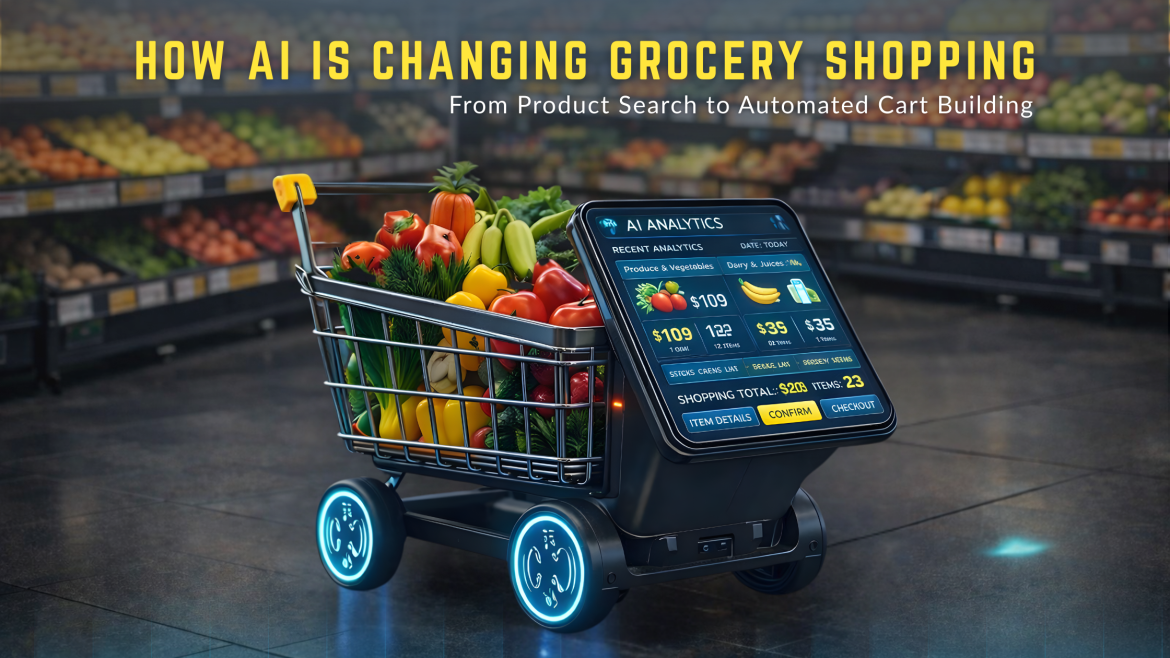
If you’re still thinking grocery shopping starts when someone opens a store app and scrolls categories, you’re thinking in an older flow. That flow still exists, but more decisions are starting earlier inside assistants and algorithm-led surfaces that shoppers use as a shortcut to a basket.
Capgemini put a clean number on it: 71% of consumers want generative AI integrated into their shopping experiences. That’s not hype, that’s expectation.
In plain terms, grocery discovery is shifting from browsing to asking. The stores that win are the ones that are easiest for an AI to understand and recommend, and easiest for a shopper to trust and check out without friction.
Shoppers Now Ask AI for Solutions, Not Just Products
The thing most grocery teams still underestimate is how tired people are of “choose from 40 options.” Shoppers are showing up with an outcome in mind, and they want the store to do the thinking. Feed my family on a budget. Pack school lunches that won’t come back untouched. High protein, low sugar, quick prep, and no second trip.
One recent consumer trends report shows the shift clearly: 25% of consumers already used GenAI shopping tools in 2025, and another 31% said they plan to use them. My interpretation is simple. Grocery is moving from product discovery to problem solving, and the winners will be the retailers that translate intent into a correct basket quickly, with fewer decisions and fewer surprises.
AI Cart Builders are Turning Shopping Lists into Instant Baskets
This is the most practical AI shift in grocery cart shopping because it removes the most annoying part of online shopping, building the cart. People do not think of perfect product names. They think in messy lists, half-remembered brands, and screenshots of recipes. Uber’s Cart Assistant is a clear signal of where this is going. You type what you need or upload an image like a handwritten list or recipe screenshot, and it fills the basket while accounting for store availability and showing store-level details like prices and promos.
Uber’s numbers show this is happening inside a habit-forming channel, not a side experiment. Delivery gross bookings grew 26% year over year to about $25.4 billion in Q4, which tells you grocery and local retail are scaling fast inside these apps.
Also Read,
Are AI Agents the Future of Online Shopping?
AI Shopping Assistants will Influence Grocery Choices Before Store Apps
Picture this. A shopper says to an assistant, “Restock the basics, keep it under my usual budget, and make sure it works for quick dinners this week.” They are not asking for a store. They are asking for a result. The agent does the browsing, compares options, builds a shortlist, and the shopper only steps in at the moment of confidence. DoorDash’s CEO basically confirmed the same pattern on their earnings call, saying agents may handle the early steps like discovery and checkout, but the thing customers judge is the end-to-end job of getting the right items delivered on time in the condition they expect.
Key takeaway
The new battleground is not getting the click; it is getting picked in the shortlist and then executing cleanly when the real world gets messy: substitutions, delays, missing items, refunds, and support are where loyalty is actually won or lost.
Why Accurate Substitutions are Critical for Grocery Customer Trust
- Grocery loyalty is decided when something is out of stock, not when the cart is built.
- A bad substitute breaks dinner plans, diets, and trust faster than any late delivery.
- The best AI work here is simple: pick the right replacement based on brand, size, price, dietary rules, and what the shopper usually accepts.
- Instacart has said its AI-driven replacements reached a 95% satisfaction rate in 2024, which shows why this is becoming a core battleground, not a nice add-on.
- The real moat is consistency: fewer surprises, fewer refunds, fewer “never again” moments.
Key takeaways
- The new UX is list to cart, not browse to cart
- Accuracy matters more than clever copy, brand size, and substitutions decide trust
- When basket-building becomes instant, the real competition is who gets the basket right the first time
How AI-Driven Dynamic Pricing is Changing Grocery Retail
Electronic shelf labels are quietly turning pricing into software. You can update thousands of prices in minutes, react to inventory swings, and markdown perishables before they become waste. That sounds great on a margin slide. But in grocery stores, pricing is emotional. The second shoppers feel like the store is “messing with them,” you don’t just lose a transaction, you lose trust.
What’s interesting is that the data does not support the panic narrative that digital labels automatically equal surge pricing. One study tracking a grocery chain over multiple years found the frequency of price changes barely moved after electronic shelf labels were installed, shifting by just 0.0006% points. That’s basically noise, not a surge. The point is simple. The risk isn’t the labels. The risk is using AI pricing without clear guardrails, especially anything that looks personal, opaque, or unfair.
Key takeaways
- Dynamic pricing is fine when it helps shoppers and reduces waste
- It backfires when it feels unpredictable, personal, or hard to explain
- The winning strategy is transparent rules and human oversight, not set-and-forget automation
AI Pricing Transparency and Grocery Regulation are Becoming Major Risks
Dynamic pricing is not automatically the problem in grocery stores. The problem is when pricing starts to feel personal and unexplainable, like the system is quietly testing what you will tolerate. That is when shoppers stop debating value and start questioning intent, and once that happens, the trust damage spreads faster than any margin gain.
Regulators are already drawing that line. The FTC’s initial findings from its surveillance pricing study highlighted that companies can use personal data to set individualized prices, including signals as granular as location, browsing history, and even mouse movements. New York has also moved on to disclosure, with enforcement pressure and public messaging around algorithmic pricing that uses personal data.
How AI Helps Reduce Grocery Waste, Shrinkage, and Inventory Loss?
Most grocery AI conversations start with the customer experience. I start with what quietly drains profit every day. Shrink, spoilage, and forecast misses. This is the work that feels boring until you see how quickly it changes availability, waste, and margin.
- AI helps forecast demand more accurately, especially for fresh and seasonal items
- It improves ordering and replenishment, so shelves match reality, not spreadsheet hope
- It supports smarter markdown timing, so the product sells before it expires
- It reduces the “phantom inventory” problem that triggers empty shelves and refunds
ReFED estimates surplus food from retail was worth $30.3 billion in 2024, about 3% of food and beverage retail sales. That’s the real reason this is the easiest AI win to prove. You don’t need a big story. If you cut waste and keep shelves fuller, the numbers tell the story for you.
Grocery Personalization Works Only When it Saves Time and Builds Trust
In grocery stores, personalization only works when it feels like a shortcut you asked for. The moment it feels like the system is guessing too much about you, nudging you too hard, or quietly changing what you see, people pull back. The win is not “more personalized.” The win is fewer wrong substitutions, fewer forgotten essentials, fewer wasted minutes, and offers that feel obviously relevant.
- Start with shopper: controlled signals like dietary tags, brands they refuse, budget ranges, and “never substitute” items
- Personalize the boring stuff first: reorder staples, smart swaps, and “you’re running low” reminders that prevent an extra trip
- Keep promos explainable: if you cannot say why someone saw a deal in one sentence, it will feel creepy
- Put guardrails around price perception: do not mix personalization with anything that looks like individualized pricing
One consumer trends report found 69% of consumers worry about personal data privacy being used for hyper-personalization, which is why transparency and control are not optional
Why Store Employees Need AI Copilots to Improve Grocery Operations?
Most grocery AI talk is obsessed with the shopper. But the place I see the fastest operational payoff is the store floor. When it’s busy, associates aren’t struggling because they lack “AI.” They’re struggling because answers are scattered. Promo rules live in one system, inventory truth lives in another, substitution policies vary by channel, and every exception turns into a manager tapping on the shoulder. A good copilot doesn’t replace people. It removes the constant back and forth so staff can move faster and stay consistent.
- Instant answers for promo and loyalty rules so checkout doesn’t turn into a debate.
- Real-time inventory and shelf checks so shoppers don’t get false “in stock” promises.
- Substitution guidance that matches brand standards and customer preferences.
- Faster issue triage for missing items, refunds, and delivery exceptions without escalating everything
- One consistent “how we do it here” brain for SOPs across shifts and new hires
One stat I like because it’s very grounded: Deloitte’s 2026 retail outlook says 59% of executives expect a positive ROI from AI-driven supply chain initiatives within the next 12 months.
Poor Data Quality Gets Retailers Skipped by AI
In an AI-led grocery journey, you are not being judged like a brand first. You are being judged like a dataset. If your availability, pack sizes, promo rules, and substitution logic are inconsistent across channels, the assistant does not “debate it.” It defaults to the retailer that looks easiest to understand and least likely to create exceptions.
This is why data hygiene is now a growth lever. One ECR retail loss research paper notes that in many grocery environments, only about 35% of inventory records are correct, which explains the most common failure customers feel: “in stock” turning into “not available” at checkout or during picking.
Grocery retail is becoming a live test environment for AI-driven decision systems. The organizations that win won’t just automate, they’ll operationalize intelligence responsibly. That’s the broader shift I explore across industries at BhavikShah.net.
