
Right now, Gaming Copilots are being positioned as a smarter way to play without constantly breaking your own momentum. Microsoft has already put Copilot into beta across the Xbox mobile app, Windows 11, and ROG Xbox Ally handhelds, and has now confirmed that the experience will come to current-generation Xbox consoles later in 2026.
What makes this more important than a normal feature update is the direction behind it. Microsoft is not treating it as a small add-on sitting at the edge of the Xbox experience. It is building toward a broader AI layer for gaming, where assistance, discovery, performance features, and player interaction all move closer to the platform itself. You can already see that in how Xbox is talking about Project Helix, Xbox mode on Windows, Auto Super Resolution, and Gaming Copilot in the same wider ecosystem story.
That matters because this is not a niche market where small product moves go unnoticed. Newzoo’s 2026 PC and Console Gaming Report forecasts global PC and console software revenues at $94.3 billion in 2026. In a market that large, even a small shift in how players discover games, get unstuck, and stay engaged can become a meaningful platform advantage.
What is Gaming Copilot? Why is Microsoft Bringing it to Xbox?
A Gaming Copilot delivers in-game support through Xbox, which enables players to access game help without leaving their games. The system provides essential support during gameplay breaks, which occur when players need to determine their next actions or complete challenging tasks, or resume their previous gameplay after taking a break. The larger concept aims to improve player assistance by making it faster and more natural than existing methods, which disrupt their gameplay experience.
- It is built around Xbox activity, player history, achievements, account context, and live gameplay questions, so the help feels tied to what the player is actually doing.
- In practical use, it can help with things like what to play next, where you left off, how to beat a boss, or what materials you need in a game.
- Microsoft is bringing it to Xbox because gaming has a real friction problem. Players get stuck, lose context, or leave the game to search for help, and that often breaks immersion.
- According to a report from Microsoft’s GDC 2026 presentation, 30% of early usage was game assistance, which was higher than game discovery usage at 25%.
- That tells me the strongest use case may not be recommendations at all. It may be fast in the moment, but it helps solve a problem before the player loses interest.
- After more than a decade working in AI implementation, I think that is the real test. Players will only keep using Copilot if it feels useful, stays lightweight, and does not make itself more noticeable than the game.
The Real Problem is Trying to Solve for Players
Copilot for gaming is not really trying to solve a skill problem. It is trying to solve the small moments that pull players out of the experience. The second you get stuck, forget what you were doing, or leave the game to search for help, the rhythm breaks. That is the real gap Microsoft is trying to fix.
- Stuck moments: Every player hits that point where progress suddenly slows down. It could be a boss fight, a puzzle, or a mission objective that feels just unclear enough to interrupt the flow.
- Search breaks: A lot of the frustration is not the challenge itself. It is having to pause the game and jump to a guide, a forum, or a video just to get one simple answer.
- Lost context: This gets even more common when players come back after a few days and cannot remember where they left off. A quick in-game layer of help can make that return feel much smoother.
- Player flow: That is really what it is chasing. Not more AI for the sake of it, but fewer interruptions that pull players out of the experience and slow everything down.
- Why it matters: According to ESA research, 81% of U.S. adults said video games provide mental stimulation and stress relief. That is exactly why friction matters more than it sounds. When the experience becomes too interrupted, the thing players came for starts slipping away.
- Real test: From my perspective, this only works if it feels useful in the moment and invisible the rest of the time. In gaming, the best support is the kind that helps quickly and then gets out of the way.
How Copilot Fits into the Xbox Player Experience
Copilot is being designed to show up in the moments where players usually lose momentum. That includes asking for help when stuck, checking what to do next, picking up where they left off, or getting quick recommendations based on play history and activity. The bigger idea is to make support feel closer to gameplay instead of turning it into another separate step.
That player experience will decide everything. If Copilot feels fast, natural, and easy to use through voice, it can remove friction without breaking immersion. If it feels slow or intrusive, players will tune it out quickly. There is some openness to this shift, though. Attest’s 2026 gaming research found that 46% of Americans feel positive about the use of AI in games, which suggests players are not rejecting AI outright. They just want it to be genuinely useful.
Gaming in-Game AI Assistance: The Most Practical Use Case of Copilot for Gaming
This may end up being the part of Copilot for Gaming that makes the most sense to players right away. People already look for help when they get stuck. The only real difference here is that Microsoft wants that help to happen inside the game instead of somewhere else. That makes the feature feel practical, not flashy. If it saves time without breaking the flow, players will see the value quickly.
It fits existing behavior
Players already ask for help when they get stuck. Copilot just tries to shorten the path between the question and the answer.
It protects momentum
The real value is not the answer itself. It is avoiding the pause that breaks immersion and turns a play session into a search session.
It feels easier to adopt
Game discovery and account features are useful, but in-game help is immediate. A player knows right away whether they solved a problem or wasted their time.
It will live or die on execution
If the response is fast, relevant, and light touch, players may accept it. If it feels slow, generic, or too eager to interrupt, they will ignore it without hesitation. That is the real line between helpful assistance and AI clutter.
Microsoft is Turning Xbox into an AI-Powered Gaming Platform
Copilot for Gaming matters because it no longer feels like a standalone feature. Microsoft is clearly building a broader AI layer around Xbox, where assistance, game discovery, AI-powered highlights, and performance features like Auto Super Resolution start connecting across devices and services. Once you look at Copilot alongside Xbox’s wider platform moves, the strategy becomes easier to see. Microsoft is not just adding AI to a game screen. It is trying to make AI part of how the Xbox ecosystem works.
That bigger platform bet makes sense in a market of this size. Newzoo’s 2026 PC and Console Gaming Report shows the market at $88.3 billion in 2025F, rising to $94.3 billion in 2026F, and projected to reach $103.7 billion by 2028F. In a market that large, even small improvements in discovery, retention, and player support can become meaningful platform advantages. That is also why this chart works well in this section. It reinforces that Xbox is making a long-term platform move inside a massive gaming market, not just launching another AI feature.
Gamers are Pushing Back Against Copilot for Gaming
The pushback around Copilot for Gaming is not surprising. A lot of players are already skeptical of AI features that show up before anyone clearly sees the value. So the reaction here is not just about Copilot itself. It is about whether this actually improves gaming or just adds another layer that players did not ask for.
- Some players see it as helpful in theory but unnecessary in practice.
- Others worry it could feel distracting instead of useful during gameplay.
- There is also a strong feeling that gaming does not need more overlays, prompts, or extra systems competing for attention.
- For many players, the bigger issue is simple. They do not want AI to become part of the experience unless it clearly makes that experience better.
That is what makes this rollout tricky. Microsoft is not just launching a feature. It is asking players to trust that AI belongs inside gaming in a way that feels natural. If Copilot feels helpful and easy to ignore when not needed, opinions may soften. If not, the pushback will only grow.
Why Privacy and Player Trust Could Make or Break Copilot for Gaming
This is where Copilot for Gaming becomes more sensitive. The feature sounds useful when it is framed as quick in-game help, but the reaction changes the moment players feel it may be watching too much or collecting more context than expected. That is why privacy and trust are not secondary concerns here. They shape whether players see Copilot as helpful support or something they would rather turn off.
Execution matters just as much. Even a good feature gets ignored if the controls feel unclear or the assistant appears at the wrong time. In gaming, players want tools that feel easy to control and easy to ignore when not needed. Copilot will only stick if Microsoft keeps that balance right and makes the experience feel useful without feeling intrusive.
Copilot for Gaming Could Improve Accessibility, Discovery, and Player Retention
One of the more practical ways Copilot for Gaming could add value is by making discovery feel easier and more timely. Players already rely on recommendation signals when deciding what to try next, whether that comes from friends and family, trailers, online reviews, or creators. That is what makes Copilot interesting here. Microsoft is not trying to invent a new behavior. It is trying to place the Xbox inside a decision flow that already shapes what players choose to play.
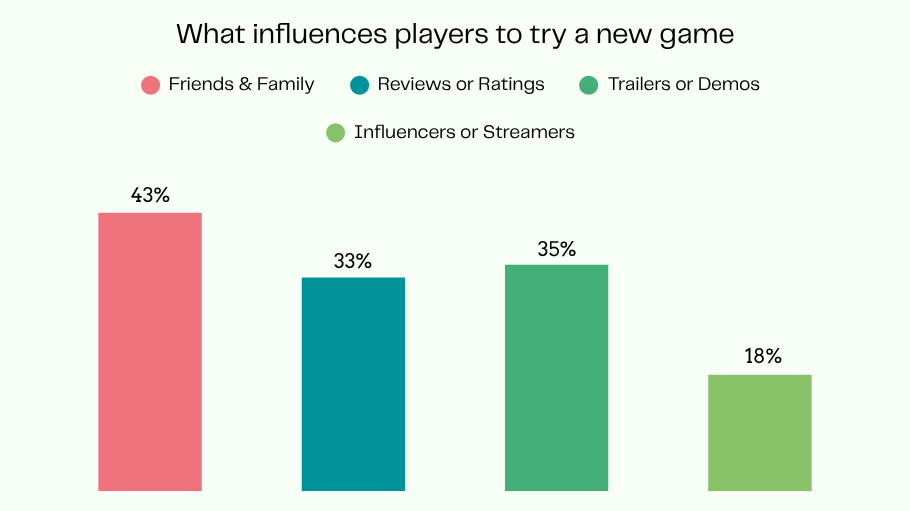
That same layer could also help with retention if it makes it easier for players to re-enter games, find the right next step, and avoid the friction that usually kills momentum. So the opportunity is bigger than game suggestions alone. If Microsoft gets the experience right, Copilot could help players discover games faster and stay engaged with less effort.
Copilot for Gaming Could Disrupt Game Guides and Content Creators
This is where the Copilot story gets a lot bigger than Xbox. For years, when players got stuck, they went to YouTube, guide sites, forums, and creators made walkthroughs for help. If Copilot starts answering those questions inside the game, that habit does not disappear, but the traffic around it can shift. That is why Microsoft’s comments around licensing and rewarding creator content matter so much. The feature is not just changing how players get help. It could also change who gets the attention and value when that help is delivered.
- When answers stay inside Xbox, fewer players may need to leave the game to search elsewhere.
- That puts pressure on the creators and guide publishers who built audiences around those help moments.
- It also raises a bigger value question about who should benefit when AI depends on community knowledge to feel useful.
- According to gaming content research summarized in 2025, guides and tutorials were the most popular type of gaming content on YouTube at 47%, which shows how central this category already is to player behavior.
If Microsoft handles this well, Copilot could become a better bridge between players and creators instead of a replacement for them. If it does not, this will quickly turn into a much bigger conversation about AI convenience on one side and creator value on the other.
Future of Copilot for Gaming: Will it Improve Gameplay or Add More AI Noise?
Copilot for Gaming will not be judged by how advanced it sounds. It will be judged by whether it makes gaming feel smoother without making it feel heavier. The real test is simple: does it help players in the moment, or does it become one more layer they learn to ignore?
As the founder of TechnoBrains Business Solutions, I believe this is where AI products either stick or fade out. Players will not keep using Copilot because it sounds smart. They will use it only if it removes friction in a way that feels natural, fast, and easy to control.
From my perspective, trust, usefulness, and control are the whole product here. If Microsoft gets that balance right, Copilot for Gaming could become a practical part of the Xbox experience. If not, it will end up as another AI feature that gets attention early and disappears just as fast.
Want to see how AI moves beyond features into real-world systems? Explore my AI implementation strategies→ OR Get in touch with me to learn how I design AI systems that drive measurable business impact.
