
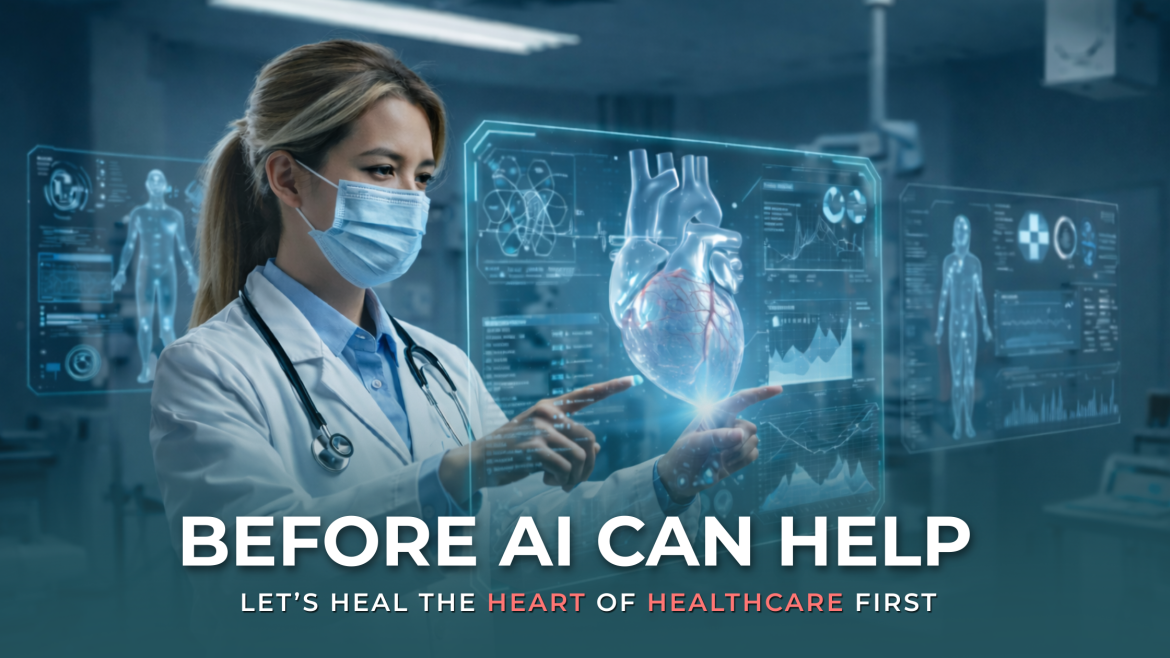
Change in healthcare rarely announces itself with a bang. More often, it slips in quietly, woven into the daily routines of clinics and hospitals everywhere. I’ve watched as new technologies have been introduced with high hopes, promising fewer mistakes, faster care, and more precious time with patients.
But the reality is more complex than the headlines suggest. Reports say that nearly half of healthcare organizations now use advanced systems to handle paperwork, scheduling, and day-to-day operations. But behind these numbers are real people: nurses, doctors, managers, and patients, each trying to adapt, learn, and trust that these changes will genuinely help.
Throughout my career, I’ve seen that the biggest challenge isn’t the technology itself. It’s about whether our teams feel prepared, whether our processes are solid, and whether we have systems we can truly rely on. Progress only happens when the people at the heart of healthcare feel supported, understood, and ready to grow.
That’s the lesson I keep coming back to: real improvement isn’t about what we add on top, but how well we strengthen the foundation underneath. This is where every meaningful change begins.
Seeing the Gaps No One Told Us About
Implementing the new systems I worked with seemed at first to bring the toughest challenges. The upgrades we implemented should have delivered three benefits to us because they were designed to prevent errors while improving decision-making speed and providing doctors and nurses with extended time to work with patients. The new systems that people implemented at their workplaces served as their main tool for completing tasks that needed to be done instead of supporting their vital functions.
Here’s what I saw happening on the ground:
- Clinicians were buried under heavy workloads, partly because patient information was scattered across too many different places.
- Manual routines and missing educational resources meant that even the best technology could only point out problems; it couldn’t fix them.
- By mid-2025, more than 1,250 new medical devices had official approval, but the systems supporting them still weren’t ready for seamless use.
- Most technology operated like a spotlight, which displayed broken areas of the system but failed to present all available solutions.
Real progress doesn’t come from replacing everything with something new. The true progress evaluation process requires the organization to provide all employees access to the necessary skills and essential support resources and to establish work procedures for optimal performance. The foundation of permanent enhancement begins with human resources, not technological resources.
Patterns I Noticed Across Healthcare
As I spent time with different hospitals and clinics, the same issues kept showing up:
- Many organizations were eager to improve their operations, but their improvements took place through multiple independent projects instead of a single unified approach.
- The World Health Organization’s Global Digital Health Report highlights that even the most financially supported healthcare systems face problems because their information exists in different locations and their systems do not connect.
- Doctors and nurses often needed to access the complete patient record, but they faced challenges because information existed in multiple storage locations.
- Only a small group of staff received proper training, so most people felt unprepared for new ways of working.
- There weren’t clear methods to evaluate whether the new changes resulted in actual benefits.
- The absence of safety guidelines and result measurement standards created uncertainty among teams about which actions they should take next.
This technology proved that AI discovered existing healthcare system vulnerabilities, which showed themselves through data silos, broken work routines, and the unpreparedness of the organization.
What Healthcare Must Fix Before Moving Forward
In hospitals and clinics, the main obstacles to progress often come from existing systems and established practices rather than the introduction of new technological solutions. The most advanced technological systems will fail if essential functions do not operate properly.
Many organizations waste resources by purchasing expensive new technologies that fail to keep patient data safe between their separate computer systems. Doctors and nurses lose important time while they search for medical information, which takes away from their ability to provide direct patient care. Staff members struggle to complete tasks because they lack proper training and equipment to handle advanced technologies. The best alerts and insights become useless when people do not comprehend their proper usage.
What really makes a difference is getting the essentials right first:
- Clean, connected data – Every patient record, test result, and imaging file should be easy to access and flow seamlessly across systems.
- Smooth workflows – Make sure AI insights can be acted on quickly, without slowing doctors and nurses down.
- Staff confidence and training – Clinicians need to trust AI, understand its suggestions, and know how to apply them safely.
- Clear governance – Establish accountability and rules for decision-making so AI becomes a helpful partner, not a source of risk.
Adding more AI systems won’t improve our situation because our current setup requires these systems to function properly. The moment I realized this impact, I found that artificial intelligence only exposed existing system weaknesses that needed to be fixed. The main points of the presentation are:
- Artificial intelligence shows system vulnerabilities, but it does not provide solutions to these issues.
- Organizations need to establish dependable data systems and operational procedures before they can start using artificial intelligence technology.
- Organizations need to develop their personnel and build trust between their employees and their technology systems.
- AI governance helps healthcare organizations use AI in ways that actually benefit patient care instead of creating extra problems.
Why Adding More AI Right Now May Make Things Worse
For a long time, I thought increasing AI functionality required more than just dedication. The technology’s strength, together with correct intent, should lead to automatic development. I now believe the initial assumption I made about healthcare systems after visiting multiple facilities. The process of implementing AI into unprepared systems results in decreased efficiency. The process of working becomes more difficult because it requires clinicians to manage additional tasks, which create unpredictable situations.
What stood out most to me was the gap between investment and readiness. According to a 2026 report by Guidehouse, 78% of health systems are investing in AI, yet only 52% feel operationally ready to implement it at scale. The existing gap demonstrates the reality that I have experienced firsthand. The technology is moving forward at a pace that exceeds the ability of systems, workflows, and teams to handle its use. The introduction of AI in unprepared areas results in clinician uncertainty, which leads to decreased workflow efficiency and the complete loss of expected operational benefits.
Over time, I realized that expanding AI too early hinders progress rather than helping it. The problem creates hidden difficulties that continue to grow. People begin to distrust each other, which creates an atmosphere of suspicion. Trust becomes fragile, which makes people feel uncertain about technology that should support them. I reached this conclusion when I discovered that all AI development needs to fix the basic system problems before starting new projects.
- The implementation of AI systems without operational readiness brings additional complexity to organizations.
- Clinicians hesitate to trust AI when workflows and data aren’t fully aligned
- The initial problems with AI implementation create permanent barriers that prevent organizations from adopting the technology.
- Technology alone cannot solve problems that exist within organizational structures and operational processes.
- The success or failure of AI projects depends on organizations’ readiness to implement the technology rather than their financial investments.
What Do Healthcare Leaders Need To Understand About AI Implementation?
Dr Eric Topol, one of the foremost voices in digital medicine, emphasizes that AI should strengthen clinicians, not replace them. He highlights that AI’s real impact depends on trust, workflow integration, and high-quality data. Satya Nadella, CEO of Microsoft, echoes this perspective, noting that AI must be deeply embedded into real workflows to create meaningful outcomes, particularly in healthcare.
From my experience working with hospitals and clinics, these insights hit home. AI doesn’t transform care on its own. It succeeds only when leadership treats it as a long-term operational shift, not a quick technology upgrade. The organizations that get it right invest in training, align teams early, and build systems that genuinely support AI in daily workflows. When these elements are in place, clinicians rely on AI as a trusted partner. Without them, AI can create hesitation and friction instead of improving outcomes.
Biggest Lessons From Implementing AI in Healthcare
After working closely with hospitals and healthcare teams, I’ve developed a belief that AI needs proper preparation to bring about healthcare transformation. The actual effects of AI emerge not from its algorithms and dashboard capabilities but from the human resources, operational procedures, and institutional frameworks that support it.
Through these implementations, I’ve seen AI expose gaps we often overlook: fragmented data, broken workflows, and staff unprepared for change. The solution reveals itself through gap resolution because clinicians obtained more patient interaction time with reduced administrative duties, while AI-generated insights enhanced their work results. The organizational reaction explains the difference between the two departments when they use the same equipment.
As the founder of Technobrains, I believe that AI technology serves as an advanced solution. The technology exists as a component of an extensive transformation procedure. The healthcare leaders need to establish their readiness through team alignment, workflow enhancement, data security measures, and trust development. The technology will become a core element for enhancing healthcare delivery once organizations complete their technology testing phase.
Here’s my advice for leaders and innovators:
- Before organizations begin scaling their AI efforts, they must first complete their operational improvements, team member training and data cleansing activities.
- Human users need to understand how to operate AI systems, which requires organizations to establish unified operational processes and build user trust in the technology.
- Teams require structured training programs because both their preparation and their technological training need equal importance.
- Organizations should strengthen their leadership capabilities through a transformation approach that recognizes technology as a tool but requires leadership and organizational culture for effective change.
If you want AI to truly transform your healthcare organization, don’t start with the tools. Start with the foundation. As I often share on my technology leadership blog, real transformation begins with readiness, trust, and aligned systems. Only then will AI deliver outcomes that matter. Let’s embrace this journey and create healthcare that works smarter, safer, and more human together.
If you want AI to truly transform your healthcare organization, don’t start with the tools. Start with the foundation. As I often share on my technology leadership blog, real transformation begins with readiness, trust, and aligned systems.
The Questions I’m Asking the Industry
As I reflect on AI’s growing role in healthcare, a few pressing questions come to mind, ones that every leader, innovator, and policymaker should be considering:
- How can hospitals and clinics establish governance frameworks that ensure AI tools are safe, ethical, and accountable in real-world operations?
- With patient data scattered across multiple systems, what practical strategies are organizations adopting to improve data integration and reliability so clinicians can trust AI outputs?
- How do healthcare leaders measure the actual clinical and operational value of AI beyond the hype and ensure that the technology truly improves outcomes?
- What workforce training frameworks are proving effective at building clinician confidence and trust in AI insights?
- As AI becomes part of patient-facing workflows, how are hospitals addressing ethical concerns, algorithmic bias, and compliance challenges while scaling solutions?
